
The Importance of Imaginative Play with Toy Kitchens
Imaginative play is a crucial aspect of childhood development, providing children with a platform to explore, create, and learn. Among the many toys available, a toy kitchen stands out as a quintessential tool for fostering creativity and nurturing essential life skills. These playsets not only stimulate imagination but also encourage role-playing, which can significantly enhance a child's social, cognitive, and emotional development.
How Toy Kitchens Encourage Creativity
Toy kitchens serve as miniature worlds where children can engage in pretend cooking, serving, and even cleaning. This kind of role-play allows kids to experiment with different scenarios, mimicking adults in their lives. For instance, a child might prepare a feast for their stuffed animals, allowing them to create stories and characters within their play. This creative freedom encourages children to think outside the box and enhances their problem-solving skills as they navigate various imaginative situations.
Benefits of Role-Playing for Child Development
Engaging in role-playing with toy kitchens can lead to numerous developmental benefits. By assuming different roles, children learn empathy and understanding. They might play the role of a chef, which can teach them about meal preparation, the importance of nutrition, and planning meals. Furthermore, role-playing enhances language skills as children often create dialogues during their play, helping them practice communication and expand their vocabulary.
Common Misconceptions about Toy Kitchens
Despite their many benefits, some parents may believe that toy kitchens are just simple toys without substantial educational value. However, studies show that imaginative play, including that which occurs in toy kitchens, is vital for developing critical thinking and social skills. Additionally, the idea that only girls enjoy play kitchens is a misconception; boys also benefit significantly from engaging in culinary role-play, learning teamwork and collaboration in the process.
Choosing the Right Toy Kitchen for Your Child
When it comes to selecting a toy kitchen, various factors should influence your decision. The market offers an array of options—from compact models suitable for smaller spaces to larger, more elaborate designs that include realistic features like lights and sounds. Understanding your child's needs and preferences can guide you in choosing the ideal playset.
Factors to Consider When Selecting a Toy Kitchen
- Age Appropriateness: Ensure the toy kitchen is suitable for your child's age group, as different models cater to various developmental stages.
- Safety: Look for kitchens made from non-toxic, child-safe materials to ensure your child's safety during play.
- Size and Space: Consider the available space in your home. A compact kitchen may be ideal for smaller rooms, while larger spaces could accommodate bigger playsets.
Comparing Wooden vs. Plastic Toy Kitchens
One significant decision parents face is whether to choose a wooden or plastic toy kitchen. Wooden kitchens are often more durable and environmentally friendly, providing a classic aesthetic that appeals to many families. They can withstand rough play and typically last longer. On the other hand, plastic kitchens tend to be lighter, more affordable, and often come with electronic features that can enhance the play experience. Each material has pros and cons, so it ultimately depends on your child's preferences and the family's priorities.
Top Features to Look for in 2026
As technology evolves, so does the design of toy kitchens. In 2026, some exciting features to look for include:
- Interactive Elements: Many modern kitchens come with smart features such as touch-activated sounds and lights, creating a more immersive play experience.
- Customisable Components: Some kitchens allow for interchangeable parts, enabling children to rearrange and redesign their setups.
- Sustainable Materials: With increasing awareness of environmental issues, many brands are focusing on using eco-friendly materials in their products.
Setting Up a Stimulating Play Environment
To maximise the benefits of imaginative play, it is essential to create an engaging and stimulating environment. A well-setup play area encourages children to explore their creativity without constraint.
Creating a Safe and Engaging Play Space
Ensure that the play area is safe and free from hazards. Use soft rugs or mats to cushion falls and keep sharp objects out of reach. Incorporating storage solutions can help keep the space tidy and organised, making it easier for children to focus on their imaginative tasks.
Incorporating Additional Items to Enhance Play
To further enrich the play experience, consider adding complementary items such as pretend food, utensils, and play appliances. These accessories allow children to expand their culinary adventures, encouraging them to explore different cuisines and cultural practices through their play.
Design Tips for a Child-Friendly Kitchen Area
When designing a play kitchen area, keep in mind the following tips:
- Height and Accessibility: Ensure the kitchen is at an appropriate height for your child, allowing them to engage fully in the play without assistance.
- Colourful and Inviting Decor: Use bright colours to make the space inviting and stimulating. Consider wall decals, themed curtains, or colourful rugs that complement the toy kitchen.
- Flexible Setup: Arrange furniture in a way that allows for easy movement and interaction, encouraging collaborative play with siblings and friends.
Encouraging Cooperative Play Among Children
Cooperative play is essential for developing social skills, and toy kitchens provide an excellent platform for children to collaborate and work together.
Benefits of Group Play with Toy Kitchens
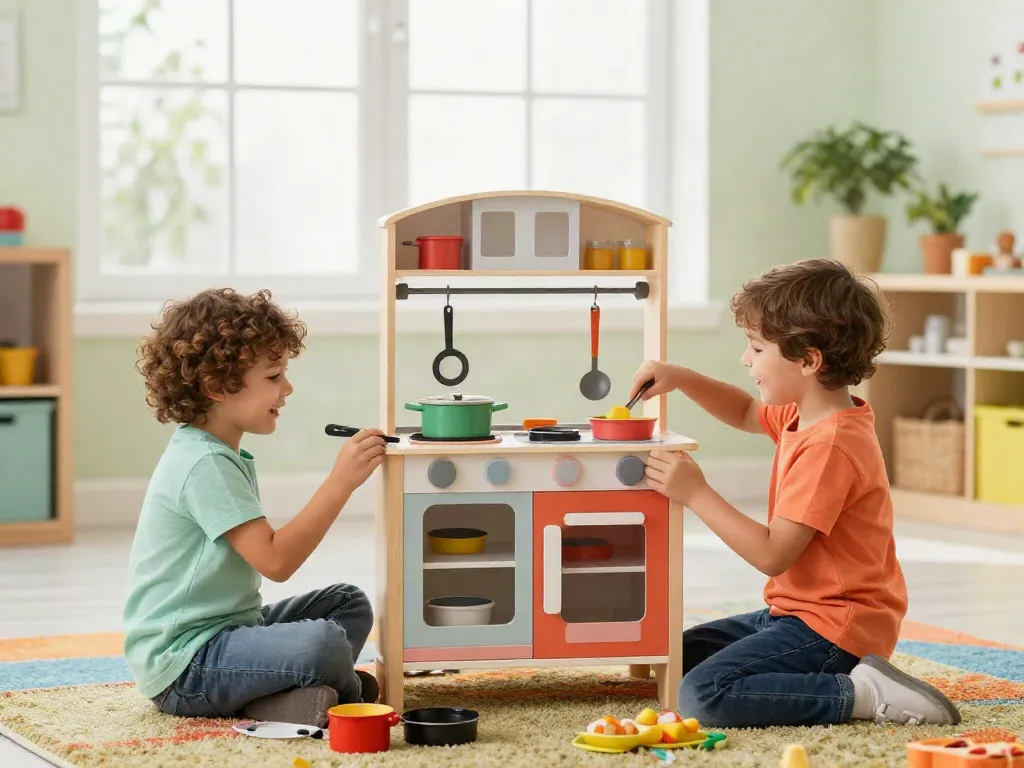
Playing together in a toy kitchen promotes teamwork, negotiation, and communication skills. Children learn to share, take turns, and resolve conflicts, laying the foundation for strong social interactions. By role-playing different characters, they can explore various aspects of relationships and community dynamics.
Activities to Promote Social Skills
Encourage cooperative play by organising themed cooking sessions where children can collectively prepare imaginary meals, create menus, or even run a pop-up restaurant with their playset. Such activities stimulate creativity and improve their ability to work in a group setting.
Parental Involvement in Playtime
Parental involvement can enhance the play experience significantly. By participating in play, parents can model positive behaviours and communication strategies. Joining in the fun encourages children to express themselves and facilitates a deeper bond between parent and child.
Future Trends in Toy Kitchens for Kids
The world of toy kitchens continues to evolve, reflecting changes in society, technology, and parenting styles.
Innovative Designs on the Horizon for 2026
In the coming years, we can expect to see toy kitchens that combine technology with traditional play. Designs may incorporate augmented reality elements, enabling children to receive cooking tutorials or interact with virtual ingredients.
How Technology is Shaping Play Kitchens
As technology advances, so does the way children interact with their toys. Smart kitchens that integrate apps will allow children to engage in cooking challenges, learn recipes, and even host virtual dinner parties, blending play with educational components.
Environmental Considerations in Toy Manufacturing
With a growing emphasis on sustainability, many manufacturers are shifting towards eco-friendly practices. Expect more toy kitchens made from recycled materials and designed with longevity in mind, appealing to environmentally-conscious parents.
What Safety Features Should Parents Look for in Toy Kitchens?
Safety should always be a priority when selecting toys for children. Look for kitchens that have rounded edges, stable construction, and non-toxic finishes. Additionally, ensure that small parts are secure to prevent choking hazards.
How Can Toy Kitchens Promote Early Learning?
Toys like kitchens can serve as valuable tools for early learning. They provide opportunities for children to learn about the basic concepts of mathematics, such as counting and measuring ingredients, and understanding time through cooking durations. Through play, children can also explore scientific concepts like mixing and chemical reactions.
Are There Age Restrictions for Toy Kitchens?
Most toy kitchens are designed for children aged three and up due to small parts and the complexity of the play involved. Always read the manufacturer’s guidelines to ensure that the kitchen you choose is age-appropriate and safe for your child.
How Can Toy Kitchens Foster Family Bonding?
Engaging in play with a toy kitchen can create cherished family moments. Parents and siblings can join in the fun, cooking imaginary meals together, leading to laughter, teamwork, and enhanced family connections.
What are the Most Popular Toy Kitchen Brands in 2026?
As of 2026, several brands stand out in the toy kitchen market. Companies like Melissa & Doug, Little Tikes, and Tiny Land have a strong reputation for quality and innovative designs, making them top choices for parents looking to invest in a toy kitchen that will last and provide educational value.